What We’ll Do

It is an incredibly challenging time in the film business. The audience is fractured, new media competes for attention, and the old ways are breaking.
But an interesting thing happens when art forms recede from the cultural spotlight: their signature works never go away. Bach, Mozart and Beethoven. Van Gogh, Monet and Picasso. West Side Story and Les Miserables. The cultural touchstones live on.
There will always be a hunger for great films and television—it’s just the imitators, exploitation projects and also-rans that fade away.
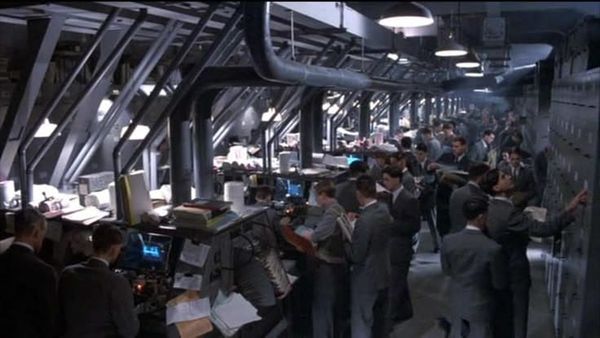
Look at the best of PROTOCALIA: Rosemary’s Baby, 2001: A Space Odyssey, The Conversation, Alien and Blade Runner; Twilight Zone, The Sopranos and Mad Men. These will be watched forever because they are that good.
They set a high bar, but it is achievable: Ex Machina, Blade Runner 2049 and the Dune films; Battlestar Galactica, Black Mirror and Severance—in recent years, they have pushed the conversation forward, and are rightfully acclaimed.
As technology and A.I. make it possible for anybody to make virtually anything, what stands out isn’t dazzling imagery, but the ability to hold an audience’s attention through storytelling.
And that is what PROTOCALIA does. It has the advantage of quality, of putting in the effort to espouse something truthful about humanity.
Movies will always require a lot of money, but the financiers and movie stars needed to support the budgets want the same things that we want: Great characters. Emotional storytelling. They are what create a loyal and engaged audience.
It’s a bold effort to make something that aspires to our standards—but the first step is wanting to try. PROTOCALIA is not camp, gore, action or pulp. It has seriousness of purpose. This is not to say it can’t be light, or different or weird—but it is not frivolous.
This site is an effort to codify the principles of our favorite storytelling, to document the works that have gone before and are in progress now—and to encourage the creation of new stories, from covering its creators to acting as a talent and development incubator.
First, we will create and commission journalism and appreciation of the projects we love: interviews with creators, oral histories and critical essays. We can provide a space for curated discussion. This will build an audience, and also be fun.
By doing the first thing, we’ll be doing the second: growing an audience that shows our projects are commercially viable—and by reaching out to our favorite creators, we’ll hopefully draw their interest and participation.
And the third thing will be the development incubator: finding noteworthy scripts, short films and short stories to promote. One of the great virtues of PROTOCALIA is its emotional content—which can be conveyed as an inexpensive chamber piece. A series of elevated genre features is a very reasonable proposition.
Let’s start the ball rolling on a community devoted to our favorite filmmaking. If you’re waiting for the other shoe to drop—a money ask—it won’t. We are not selling subscriptions, courses or frankly anything. We are asking only for your attention.
This will be a challenge, but we are up for it. One of my favorite aspects of PROTOCALIA is that, despite an often bleak look at humanity’s institutions, it ultimately offers hope. The protagonists discover something about themselves that gives life meaning. I leave the stories not depressed, but validated in my faith for the future.
It is an atypical, even oxymoronic kind of “secular faith”—but faith nonetheless. I have it now, more than ever. I’m willing to bet that by combining great work with clarity of intent, we can achieve more of what we love.
It’s as simple as saying—this means something to us. We can have entertainment that also has meaning. Brains as well as heart. Let’s do it.
Our next steps will be making guidelines and a submission portal, which we’ll unveil in the weeks ahead.